Who The Fuck Is Kip Hanrahan?
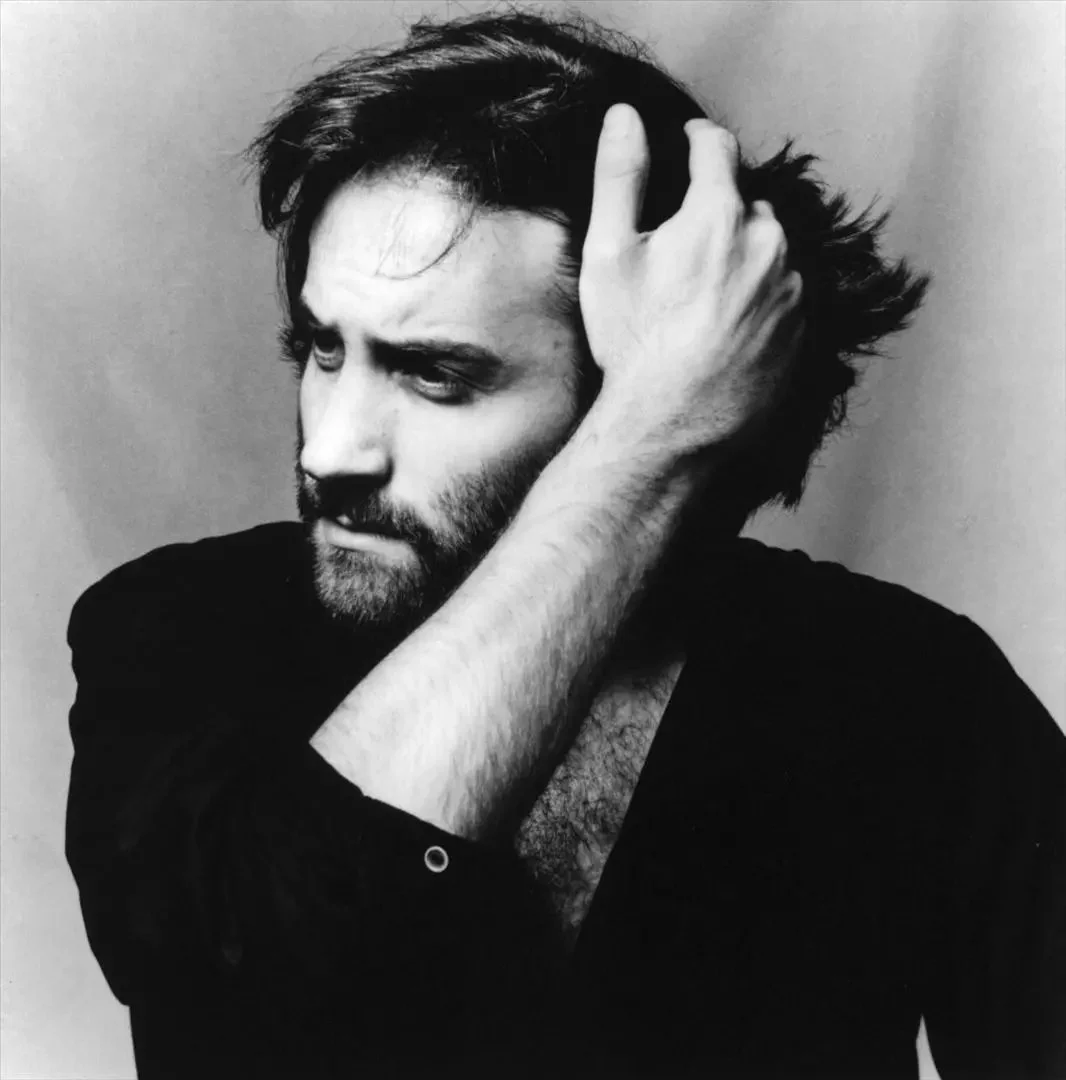
Impresario, lothario, maverick: Kip Hanrahan is a lot of things, but in the beginning, he didn’t even consider himself a musician. Over the last 45 years, he’s assembled an enviable catalogue of smoky, shadow-splashed Afro-Cuban jazz, and it’s well worth knowing about.
New York City has long been a melting pot.
In the 20th century, it was home to a groundswell of creative tides: the Harlem Renaissance, the punk, new- and no-wave movements, the disco scene, and hip-hop culture all sprung from the five boroughs. The city’s diversity lent itself to a collision of taste, with scenes constantly splintering and fusing in novel ways. These fault lines, bridging cultures and communities, were a playground of cross-pollination, lending themselves to the idiosyncratic and unique. Kip Hanrahan was one such artist.
Kip’s music is a reflection, though one assembled through direction: he operates as a musical auteur, surrounded by a frequently rotating roster of musicians, moving his ensembles towards a feeling. It’s quintessentially New York: to hear Hanrahan is to see stark shadows cutting city streets, taste the humidity on a hot summer night, or feel Afro-Cuban music spill from the fire escapes of the Barrio. It exists on the edge of jazz, salsa and pop, riding the push-and-pull of the mainstream and the avant-garde. It is energetic, impassioned, insular and strange; more than anything else, it is lit by the flame of desire.
The half-light from which his music emanates is the same that splashes from a lamp in the corner of some three-storey walk-up, illuminating a private world of secret encounters. Kip’s is a hard-boiled world, but he himself is far from guarded: the simmering salsa and impassioned jazz gives way to eccentric characters, proletarian hustles, and all manner of frank sexual confessions. He trades in not only intimacy and connection, but also in distance and estrangement, the wages of vulnerability.
These perennial obsessions have infused Kip’s work with an uncommonly sharp vision, one which has persisted across his 45-year solo career. In a changing city, with little in the way of money or fame, Kip has quietly carved out a startling catalogue, working closely with a swathe of legendary jazz and Afro-Cuban artists. His longevity is made all the more surprising given he isn’t really a musician at all — at least, not by his own estimation. In the nooks of New York City, Kip strikes as a philosopher poet obsessed with exploitation and desire, interlinked poles he takes as nigh-mythic forces that propel us through our lives.
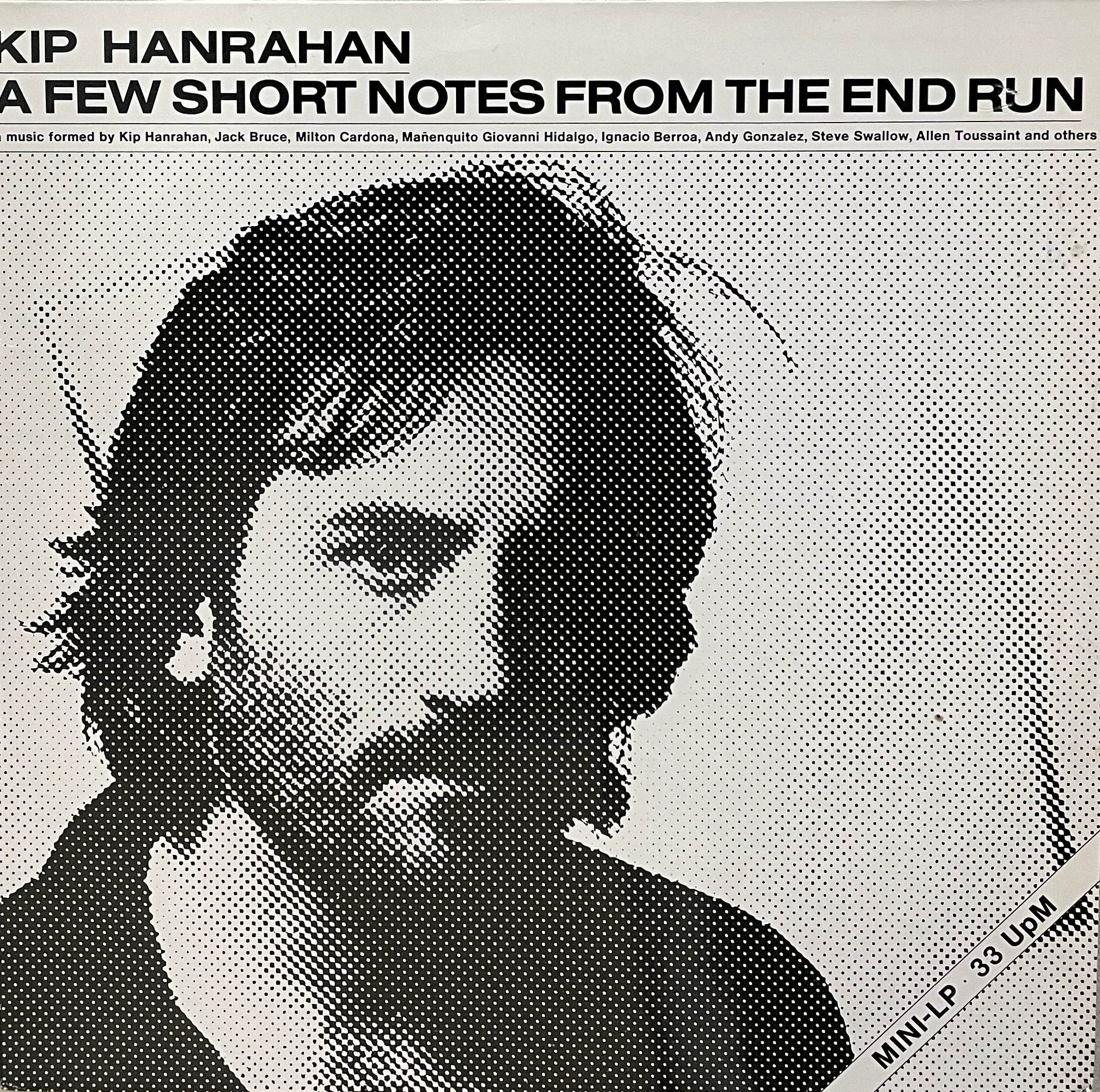
An Irish-Jewish kid raised in the Bronx, Kip Hanrahan grew up in a Puerto Rican neighbourhood, surrounded on all sides by the sounds of Latin music. He briefly played guitar and congas in a Latin band, though it didn’t seem a calling. "I don't think I was ever good,” he admitted in 1989. “No, I know I was never good." In spite of this, Hanrahan’s manifold creative passions coalesced around music, slowly making some sort of musician out of him.
This musical journey unwittingly began in the mid-’70s. Hanrahan worked at New Music Distribution Service, a non-profit record distributor which helped more than 500 small labels distribute experimental jazz and contemporary classical records. Carla Bley and Michael Mantler, co-founders of NMDS, were celebrated experimental jazz musicians; the job offered many opportunities to make creative connections.
Important creative connections were also being made in the everyday, with time spent “traveling to the Maghreb, India and West Africa” as important as that spent with Ornette Coleman and James Brown records. Hanrahan’s emerging musical practice was informed by his time at Cooper Union, where he studied filmmaking and sculpture, and augmented by his curious sidesteps, like the year he spent studying Islamic architecture, or his time in France, where he worked with Michel Contat and Jean-Paul Sartre on a film — presumably Sartre by Himself, a three-hour documentary. He also worked with Jean-Luc Godard, "but it depends who you ask,” he later quipped, “if you ask him, he'll tell you I worked against him." In 1979, having returned from abroad, he founded independent music label American Clavé and set about preparing for his debut album.
That mantle spoke to both Kip’s Bronx upbringing and his knowledge of latin music. A clavé is a type of percussive pattern that originated in Sub-Saharan Africa. It proliferated as a result of the slave trade, becoming a key component of many musical forms, most notably in salsa, rumba, reggae, and Afro-Cuban jazz. There are classically two forms of clavé — son clavé, which underpins Afro-Cuban music, and rumba clavé, which explains itself — though many different clavé have been proposed and developed as the sound spread. Hanrahan’s American Clavé channels that idea, imagining a clavé specific to the nation in which he was raised.
It appears that, up until founding American Clavé, Hanrahan had never even earned a credit on a record. In spite of his inexperience, people came, and he helmed his first label release, Jerry Gonzalez’s solo debut, Ya Yo Me Curé, in 1980. Hanrahan designed the album art, sharing mixing and producing duties with Gonzalez; he shared the same responsibilities with Teo Macero on his 1980 Clavé-released record, Teo. These two albums showed the breadth and depth of his vision, with Gonzalez a fledgling salsa sensation and Macero the onetime producer to Miles and Brubeck.
These worlds coalesced on Coup De Tête, Hanrahan’s 1981 debut. “Whatever I Want,” the opening track, pairs avant-garde stalwart Bill Laswell with latin jazz titan Jerry Gonzalez and former DNA member Arto Lindsay with Cuban-American percussionist Daniel Ponce. Hanrahan’s heavily accented vocal lands on a mantra — “don’t tell me I can’t lose what I don’t have / ‘cause I can lose whatever I want, and I want you” — and crisp saxophone breaks through, gliding across latin percussion as it cuts through scratchy interference. It’s a strange and striking fusion: if you were looking for an entry point into two separate late-century scenes, you could do worse than scouring the credits of Coup De Tête and working your way through the names.
“This Night Comes Out of Both of Us” is a dream pulled taut, percussive and wispy, duelling flutes dancing about Lisa Herman’s intimate reflections. The album’s standout, “India Song,” is a honky French language piano piece, with Clara Bley on keys and vocals. On the b-side, the biting “No One Gets to Transcend Anything (No One Except Oil Company Executives)” lumbers towards Kip’s snarky political critique: “every dollar that makes up the blood of this record, every dollar I see in my breakfast, every dollar I see in the eyes of the woman I’m eating breakfast with… will someday help an oil executive transcend, first class to heaven.”
Coup De Tête features Hanrahan in an uncommonly prominent position, with his voice front and centre on a number of the tracks. On his sophomore record, 1984’s Desire Develops An Edge, Kip sings on just two tracks, the scattered “Trust Me Yet?” and the upbeat “(Don’t Complicate) The Life - La Vie.” This backseat relegation is explained by his evolving creative practice, which he described like his filmmaking experience: "Making a record is like making a film… the recording engineer becomes the cinematographer; I work with the musicians as I would with actors; you sing their lines the way they should be phrased; you shoot scenes, and the scenes are not in sequential order, and every scene has a different light and sound."
Hanrahan’s presence is most keenly felt in his lyrical contributions, strained and impassioned. Loft jazz figurehead-turned-music writer Brian Olewnick noted that the first word of Kip’s career was “sex,” establishing his enduring fascination. His is a tortured kind of love, the sort that blossoms in the cracks between the singer and the muse, frequently doled out in shades of confusion, contempt and bitterness. Intimacy and estrangement, an ever-swinging pendulum, moves to the rhythm of sensuality.
Though Kip’s lyrics reflect knotty interpersonal strife, his career has been marked by a number of longstanding creative partnerships. Kip found close confidants in his ever-rotating musical entourage, and of these collaborators, few were closer than Jack Bruce. A veritable blues legend, Bruce first came to note as bassist of the cult ‘60s group The Graham Bond Organisation, and later played with John Mayall & the Bluesbreakers, a group whose ephemeral membership counted a number of legends. In 1966, he joined with Bluesbreaker’s guitarist Eric Clapton and GBO drummer Ginger Baker to form Cream.
Bruce’s contributions went far beyond his prodigious bass, writing rock standards such as “White Room” and “I Feel Free” alongside his poet collaborator Pete Brown. Cream were active from July 1966 to November 1968, cutting four records in just over two years. In the wake of Cream, Bruce founded another supergroup, West, Bruce and Laing, but focused mostly on his solo career, playing bluesy jazz-rock.
In 1971, Bruce worked on Clara Bley and Paul Haines’ triple-LP ‘jazz opera’ Escalator Over The Hill, placing him within Hanrahan’s orbit. Though a blues man, Bruce was raised on jazz — “my mother and father were ballroom dancers and my father was knowledgeable about jazz,” he recalled in 2009 — and briefly trained in classical music. He kept a foot in the past even as he adopted novel innovations: in January 1983, moments before his debut alongside Hanrahan, Bruce released Automatic, which heavily featured the then-new CMI Fairlight sampler.
On 1983’s Desire Develops An Edge, Bruce handled vocals on 11 of the album’s 17 tracks. He gives voice to Hanrahan’s ego, centering the private concerns of a man all but invisible in the mix. Kip is the invisible hand, guiding the record into his own strange pockets: take the title track, a six-minute opener that’s all duelling drumbeats. The lively “What Is This Dance Anyway” is all swing and brass, while “Two - Still In Half Light” chases it with moody bass, stretching into the increasingly familiar shades of love, money, hustles and internationalism that cloud his mind.
The slower tracks, such as standout “Velasquez,” are composed by Hanrahan alone; the peppier moments of latin dance are credited to broad band collaborations. “(Don’t Complicate) The Life,” a seven-minute party, is put to a veritable brains trust: Ricardo Franck, Kip Hanrahan, Paul Haines, Tico Harry Sylvain, and Michel Desgrottes, a little-known Haitian compas artist, are all composers.
In spite of his central presence, “Child Song” is the only track composed by Bruce. He’s the namesake of “All Us Working Class Boys (For Jack Bruce),” on which he details the hardships of poverty, lamenting the inability of “making money stay,” as though it’s some fickle lover. It was a sharp reflection of Kip’s reality — and the reality of many a jazz sessionist or niche label owner — but Desire Develops An Edge seemed, for a moment, to set Kip on the path to some sort of financial stability.
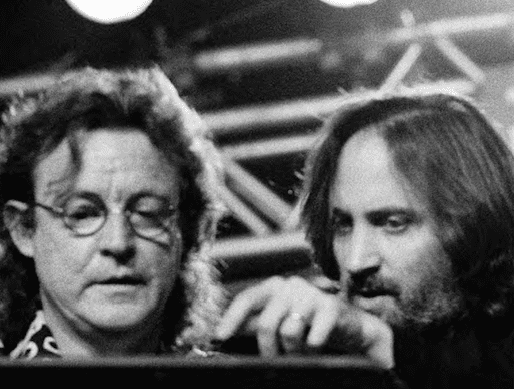
L-R: Jack Bruce and Kip Hanrahan.
The unlikely pairing of Hanrahan and Bruce brought Kip the most success of his fledgling career. He was making impressions and moving units, raking in critical praise while connecting with an expanding audience. In the wake of that small win, Kip finessed the formula, retaining Bruce, decluttering his arrangements, and shooting for shorter, sharper songs. This collection, Vertical’s Currency, arrived in 1985.
In terms of a pop pivot, Vertical’s Currency couldn’t be more slight: in a year defined by Wham, Madonna and Tears for Fears, Kip’s particular brand of erotic jazz fusion was all but destined for the periphery. “A Small Map of Heaven,” the five-minute opening track, reaffirms Kip’s trademark intransigence. A lustlorn plea dominated by the duelling poles of Bruce’s soft vocals and David Murray’s straining sax, it’s an admirably sexually charged pass at something commercial. That it’s followed by “Shadow Song (Mario’s in),” a horn-heavy instrumental that plays like a score, somewhat undercuts even that mild attempt.
That’s not to say he doesn’t straddle the line: “Make Love 2” is Hanrahan’s great pop song, no less impassioned, no less desperate, but more conventional in every sense. A collaboration between Bruce and his poet collaborator, Peter Brown, “Make Love 2” features former Lounge Lizard Anton Fier on kit, David Murray on saxophone, and Bruce on bass. In a better world, it might’ve made a bigger mark; in this one, it left an impression on legendary Japanese producer Nujabes, who sampled it considerably on “Beat Laments The World,” later reworked into terrific J-pop track “Shiki no Uta.”
Kip’s detailed maps of desire continue developing their trademark edge, with Vertical’s Currency featuring some of his best work. Album highlight “Two Heartedly — To The Other Side,” featuring a dreamlike Bruce on bass, is myopically fractured, tracing missteps in every unassuming motion: “he needs her, too finally / he had her, too deeply / he [...] her, too heatedly / he finds her, too syncopatedly / he kissed her, too fraternally / he eased her, too cheaply / then she goes…”. The ephemera of inner-city loving has never been so pithily deconstructed.
The record received rapturous critical consensus, further cementing Kip’s place as a jazz maverick, but the sales didn’t measure up to those of Desire. Vertical’s Currency, in hindsight, marked the apotheosis of Hanrahan’s pop inclinations, and that move away from wider appeal brought with it new and not entirely unforeseen challenges.
Days and Nights of Blue Luck Inverted was recorded over a period of two years, with the stop-start approach becoming an inadvertent part of Kip’s practice. “Kip’s albums often took some time to see the light of day because he was always short of funds,” wrote Harry Shapiro in Jack Bruce’s 2010 biography. “He went into the studio whenever he could, and whenever his cadre of musicians was available.” The first sessions were in May ‘86, with recording concluding in March ‘87, though financial delays meant that the album didn’t appear until June of ‘88.
“Some records are there because there’s money that demands to be made, some records are there because there’s a career that demands to be realized, this is a record that’s here because there was (is?) a mood, understood or misunderstood as above, constantly succeeding itself, that demanded to be heard,” read the typically philosophical liner notes. He credits four bands, each with specific configurations, before musing that “the bands overlap, even more than is apparent from the printed lineups, sometimes fiercely, and nobody can honestly tell you where one band begins and another ends.”
It does, however, confirm one striking change: the lack of Bruce vocals. Blue Luck Inverted was fronted instead by Fernando Saunders, a Detroit artist best known for his longstanding rapport with Lou Reed. Sounders played bass and sang backing vocals on 1982’s The Blue Mask, making this his second blue-themed collaboration. That’s not him on the opener, though: “Love Is Like a Cigarette,” a slow sax-doused cover of the 1935 tune by Richard Jerome and Walter Kent, features Clara Bley making the sensuous comparison. It was arranged by Hanrahan, who said the song was “made beautiful” by Duke Ellington and Ivey Anderson. Their version, a big band foxtrot, casts a totally different light, emphasising Hanrahan’s mournful vision — without so much as changing a word, Kip and Clara wring the loss from love.
“A Poker Game / Luck Inverts Itself / Four Swimmers” shows the new potential of Saunders, whose voice is far more nimble than Bruce’s. He finds agile pockets in amongst the brisk percussion, offering a laugh or a wry aside as he spins a tall story about gambling. There's a new attitude to it, new vigor, a counterpoint to Bruce’s more melancholy approach. It shines again on “Gender,” a light, bluesy jaunt with horn arrangements from Allen Toussaint. “A Model Bronx Childhood” seems to hone in on the rhythm that propelled Kip’s younger years, while “Lisbon / A Blue Request” lets loose a vocal line not often heard on these records. I’m partial to “Road Song,” which turns into half-spoken recollections of conversations, a heady discussion with a powerful sound behind them. The outro, “Unobtainable Days, Unobtainable Nights,” is a bass-heavy mood piece that features a brief vocal appearance from Kip himself.
It continued Kip’s place as a critical darling, even if to a relatively small pocket of jazzheads. “It's also music that sums up the intelligent side of our age, inquisitive, open minded, sensuous,” wrote Peter Watrous in a glowing review. “That it existed in the era of Reagan will be one of the mysteries to be debated by social historians.” Watrous caught Kip playing at the Brooklyn Academy of Music soon thereafter: “there's Kip Hanrahan, who's got an elaborate stage, which he's using for about two seconds, with different Latin musicians moving around, along with some singers and an actress, who will be echoing his innermost thoughts about sex, love and money, his traditional themes.”
This album seemed to offer the cash-strapped Kip some hope for the future, with Days and Nights of Blue Luck Inverted one of the first records released by new world music label Pangea. That shortlived relationship is perhaps best explained through the lens of Hanrahan’s subsequent record, 1990’s Tenderness.
Tenderness reconvened a crack group of jazz legends, doled out a heavy dose of Spanish influence, and — perhaps strangest of all — added Sting to the mix. In a 1994 profile, Hanrahan named the record as one of his personal favourites, with his wife framing it as a record cut “with his teeth showing towards money, defying the financial limits with a viciousness.” By 1990, Kip’s sensuous catalogue had put him in a longstanding will-they won’t-they with bankruptcy, a consequence of making uncompromising music featuring a deep bench of billable talent.
This was not the case for English rockstar Sting, who by the late ‘80s was riding about as high as anyone. In 1988, the same year he featured jazz saxophonist Branford Marsalis and drummer Manu Katché on “Englishman In New York,” Sting took his eclectic taste further by launching a record label. Pangaea, in his own words, was formed as “an extension of this thing that music shouldn’t agree with what’s imposed on it – the labels, the ghettos.” It quickly entered a contract to re-release selections from Kip’s American Clavé, which were in keeping with String’s fledgling interest in so-called ‘world music.’
The deal soured almost instantly. "We never saw any money,” said Kip to The New York Times in 1991. “I kept producing records for which I never got paid. When I look back, it seems like a joke of providence. I was intoxicated. I was so angry, so frustrated, so deep in debt, I became addicted to anger.” The already-strained Hanrahan spent "tough years" negotiating the spoiled opportunity with lawyers, but even in his indignation, he didn’t hold the man himself responsible.
"I don't think it was Sting's fault. A lot of it was just record company arrogance rather than malice,” explained Kip. “The people who worked for him, I could hear them thinking, like 'O. K., we have to humor Sting, but who does this guy Hanrahan think he is, putting out a record by some Italian accordion player from Argentina which can't possibly sell more than 1,000 copies.'" That record, from Argentinian tango master Astor Piazzolla, ultimately sold more than 20,000 copies on American Clavé.
That Sting appeared on Tenderness is testament to both Hanrahan’s rapport and his righteous anti-commercial bent. "They thought they'd finally have something commercial,” he joked of their collaboration, relishing the affront. “They said Sting doesn't even sound like Sting. It's true, and it was hard work.” Sting’s turn is so chameleonic, I can’t even confidently distinguish his (usually accented) voice from the rest of the project’s vocalists. “The emotional roughness is intentional. The lines are asymmetrical, the words don't rhyme. Sting worked hard to do what I wanted him to do. He worked hard with Fernando Saunders on the bass part.”
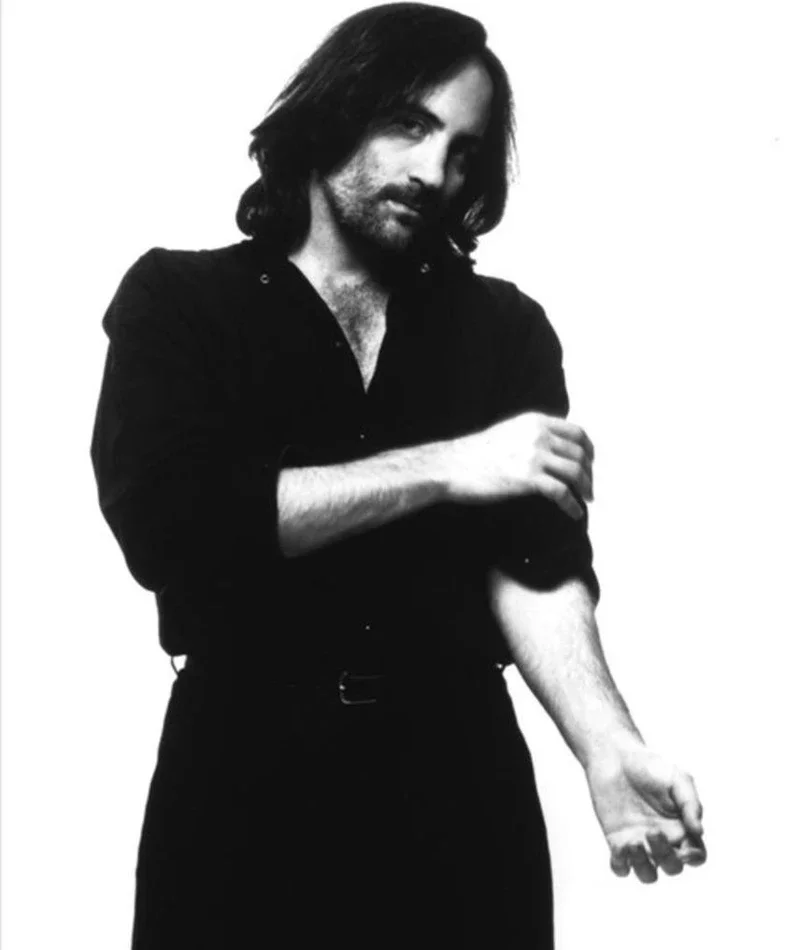
1992’s Exotica bursts forth with the tight-wound kinetic energy of “You Can Tell A Man By His Anger,” which moves with a staggering swing. It’s a pull that carries through the album, which featured a new ensemble approach: Hanrahan was backed throughout by a core set of musicians — Jack Bruce, violinist Alfredo Triff, pianist Don Pullen, former Meters guitarist Leo Nocentelli, and drummer Robby Ameen — and augmented on individual tracks by guest players.
This smaller grouping presumably made it easier to work within Kip’s eccentric bounds, which tested even the session-hardened Jack Bruce, one of Kip’s closest confidantes. “[Kip] would have an arrangement very carefully written out, some esoteric piece of Venezuelan big band music something-or-other,” recalled Bruce in his 2010 biography, Composing Himself, “then he’d put all these beautifully written arrangements in front of you and say, ‘that’s what I don’t want.’ He actually did that once.” At one point, Hanrahan told his ensemble to “memorize the parts and don’t play a single note I wrote. I’m bored with this. This is what I meant two days ago, now let’s surprise ourselves.”
Though long a part of his poetry, Exotica simmers with revolutionary fervour, with the plight of the exploited worker foregrounded throughout. Standout track “The Last Song” is Hanrahan’s snarling proletarian provocation, emptily reciting the many-faceted changes that’ll take hold “when the workers take the world.” Included in that vision: “fair wages for all,” “strikers won’t be shot,” “sex without limits,” and most specifically, “the Jews will live in a socialist Israel at the same time the Palestinians live in a free Palestine.” It’s not the only revolutionary exploration on Exotica, as just a few tracks later, Bruce is taking the measure of a man “by the way he can’t imagine life without capitalism.” That measure, one would think, is to a lesser degree.
“As In Angola” explores a lack of imagination, with revolutionary upheaval deteriorating into a seemingly endless cycle of liberation and oppression, where “Red Star” turns the titular image into a seductive, intoxicating refrain. References to the Cuban withdrawal from Angola and the collapse of the Soviet Union, then contemporary events, push the political to the fore, with Kip’s wry lyrics and oblique meditations casting a troubled eye across the rapidly-changing globe.
Nonetheless, moments of interpersonal intimacy break through, with the record’s prominent groove lending sensuality to Kip’s already-forthright lust. “G-d Is Great,” the album’s ten-minute centrepiece, is a stirring testimonial to the minor moments of a tryst, like the stillness of the room, the sweat on one's neck, and the fingernails running over one’s shoulder.
This stark fusion of the personal and political poses a question, which Kip answers outright on “You Can Tell A Moment Of Clarity By The Digital Trace It Leaves” —“Exotica, what the fuck’s that? Evidence of someone else’s life.” It’s a definition in step with much of Kip’s work. If we’re defining Exotica apart from his greater catalogue, I find this this passage from “The Last Song On The Album” much more illuminating:
In the sixth year of the intifada; in the hundredth year socialism reforms itself… you knew that history’s not a straight line, it’s a spiral with spokes going in all directions at once, that’s syncopated by false starts, that can be an eclipse… in the sixth year of the intifada; in the millionth year the US war machine was smug in its ability to deter democracy…”
His work grew no less ambitious, with Hanrahan spending much of the ‘90s consumed by A Thousand Nights and A Night, an abstract musical adaptation of The Arabian Nights that grew into a three-record series. The project was named for Richard Francis Burton’s 1888 translation of Arab folktales which, as the only complete English translation of One Thousand and One Nights, has both been lathered with praise and condemned with criticism for its overly extravagant translation and then-obscene focus on the sexuality therewithin. It seems, naturally, a perfect fit for Hanrahan’s vision.
That The Arabian Nights could be adapted into a nearly three-hour triptych is unsurprising. In the Red Night liner notes, Kip credits “the translations of the Arabian Nights by (the forty volume, unreadable) Burton (including Supplemental Nights), Dawood, Mardrus/Mathers, Pasolini, Borges, Zipes, and (in ways the clearest) Haddawy,” a selection that includes translations, translations of translations, critical essays regarding translations, and a celebrated Italian film. These adaptations, save Burton’s original, are all abridged, including specific stories while removing others. Kip’s difficult-to-place selections emphasize his own interpretive vision, though they’re “told (sung) pretty much verbatim, as [he] understood them.”
"I lose myself into something as far away from me as possible," remarked Hanrahan to The New York Times in 1994, “and still you see yourself in the magic of it." That interview, which discussed A Thousand Nights and A Night, was conducted two years before the first instalment would materialise. Even then, the scope seemed ever-expanding. “The work just keeps growing, he doesn't know where it will end,” wrote the Times, “and not until he brings in all seven vocalists---Ruben Blades, Jack Bruce, and Carmen Lundy, among them---can he finish the writing.” Kip put a finer point on the proceedings: “I'm selling myself into bankruptcy basically to make this record.”
That conversation offers rare insight into Kip’s conceptual process, especially as it relates to what would become his most intriguing creative sidestep. He frames his drive as a desire to "make a sequence of passions audible,” putting his sometimes tempestuous behaviour down to the importance of that mission. “I'm going to knock down walls to get to it, and I don't care who's standing in front of it," he proclaims, those flashes of intensity rising "out of anger and passion and sexuality."
The conceptual bent of the record freed Hanrahan from his intensely personal meditations, letting loose sequences of frenetic instrumental vamps — take Shadow Night 2 track “The Tale Of The Youth Behind Whom Indian And Chinese Music Was Played, And The Tale Of The Jaundiced Youth.” These long, exploratory movements are still no less imbued with personality, with Kip incorporating and even favouring moments of inspired error. “On that take, the mistakes were showing what we were going for, and when we got it right, it was just reciting something that was composed before,” he explained.
It’s a perspective in keeping with his greater philosophy, which prizes the process itself, eschewing strict notation for intuition and feeling. "There's this emotion inside of you that needs to make itself heard, and you don't know exactly what it's supposed to be heard as, but you know the direction it's supposed to go," he said of his philosophy. "You know the result you're aiming for, even if it doesn't have any definite angles, and you fight through the process to make it heard."
It’s not the only fight that the record puts up, as Kip himself makes clear. “It’s pretty much impossible to listen to the entire disc, intensely, in one’ pass, so a producer’s suggestion is to take a break (a nap?) at about the fifty something minute mark (after “Princess Dunya and Taj al-Muluk”), and resume listening with “Princess Dunya’s Nocturnal understanding,” he quips in the candid Red Night liner notes. “The pieces and music on this disc needed to be here, in this night cycle, so as far as cutting is concerned, in this case, it doesn’t make sense to offer ‘less.’ Anyway, nobody’s putting a knife to your neck and making you listen to everything. Listen to what you want of the offering.”
That quasi-adaptation of A Thousand Nights and A Night presaged Hanrahan’s next project, the soundtrack to the all-but-forgotten Piñero, a 2001 biopic about Puerto Rican poet Miguel Piñero. A pioneering figure in the Nuyorican movement, a cultural scene of Puerto Rican artists in New York, Piñero came of age in the city, wrote acclaimed play Short Eyes while incarcerated at Sing Sing, and co-founded the Nuyorican Poet’s Cafe, a still-legendary venue in Alphabet City.
It seems strange that this would be Hanrahan’s first foray into scoring film, but the project is clearly a fit on a thematic level, with his sweaty style of inner-city latin jazz endearing itself to the story of an ex-con navigating New York’s Downtown scene. “Exterior New York Night,” the space where I imagine much of Hanrahan’s music, is a cavernous skeleton for Benjamin Bratt’s rendition of Piñero poetry; “Mikey Enters The Shooting Gallery” pairs soulful saxophone with a rendition of slug lines and action text that don’t sound too unlike a scene of Kip’s own devising:
The screen is black. We hear footsteps of someone walking up the stairway, and voices. A match lights up. The flame flashes the profile of a man. The cigarette is lit. We see the eyes, black, intense. We follow the burning cigarette as it moves up the stairs. The door opens. We see what’s left of the man smoking the cigarette. The junkie wrap, the shit jive that fascinates the man searching for the lowest glow. At ease now, he is himself, ready to retreat to the warmth of the womb, to that lovely and selfish place where junkies stop by to die… and live, over and over.”
In the constraints of the score, which calls for shorter tracks and lighter touches, Hanrahan produced larger pieces like “Surgar’s Theme,” a groovy seven-and-a-half minute skulk starring trumpet from Jerry Gonzalez, and “Look, the Moon (Carmen’s),” a rework of a Tenderness track that lands like a lament, casting the original theme darker. The postscript, “Funeral Poem Celebration / Scattering the Ashes,” fuses Piñero’s powerful A Lower Eastside Poem with Kip’s delicate arrangement. Tasked with scoring a world he’d always explored, Kip produced one of his moodiest pieces yet: ‘world music’ for a world cast in skyscraper shadows, where the arrangements might emanate from doors left ajar and waft through thick plumes of smoke.
Beautiful Scars, Kip’s first album in seven years, seems to mark a transition into a new stage of his life. It stands as one of his most conventional records, with lyrics direct and vocal melodies pushed to the foreground. A glowing BBC review places the album within “the art department of New York, Cuba and New Orleans, via Glasgow, Essouira and Palestine,” a familiar set for the initiated.
Familiar too is Kip’s eye, which produces “a very, very sexy record” that’s ever-concerned with “the politics of global capital and exploitation.” The approaches here, as noted in the review, are different: “one can't - on the BBC website - describe the specific tastes, pressure, use of tongues and the subsequent intrinsic angers, joys, regrets and delusions derived, which this record cannot help but embody,” writes Paul Bennun, while noting that the political edge is “not in your face, but because that's what the world itself is about and only a miniscule amount of musicians take it on.” It’s channeling the immediacy of the tangible and the distance of the abstraction which, though both bearing down on us, exert their power in distinct, oft-mysterious ways.
More than many that came before it, Beautiful Scars is a record that plays out in space, with a keen eye for the surrounds that intermingle with Kip’s characters. “Night Cumbia” is a lumbering bilingual nocturne, lit by a moon that reveals the true self; “Paris Through Tears” is a misty-eyed stroll down a rainy rue, featuring a tragic saxophone from Ron Blake; “Montana” fuses pitter-patter percussion and cascading piano with husky visions of vast landscapes and tight-knit intimacy.
The tracks are more spacious; they stretch out across their international locales with an ease, generally slower and less instrumentally dense than Kip’s more avant-garde Afro-Cuban grooves. There’s a melancholy to these arrangements, which flow into one another with patience and measured insight.
At Home In Anger, Which Could Also Be Called Imperfect, Happily, on the other hand, returns to the more tight-wound roots of Kip’s sound. His all-star collective of unbelievable talent is on full display, from the late Milton Cardona and Robby Ameen to Steve Swallow and Fernando Saunders.
These arrangements spill over, smooth and unencumbered, with tracks like “Gift,” “Another Autumn Forms” and “The Savage Dawn In Her Glance” humming with a heady synchronicity. The slower shift in his songwriting, lending itself to more conventional vocal melodies, shines through on a handful of Kip’s most restrained tracks, such as the melancholy “Suenos De Vida Colonial” and the dreamlike “Need.” Those two tracks also demonstrate the bilingual nature of the record, with a spate of Spanish-language tracks featuring vocals from artists such as Saunders, Brandon Ross, Xiomara Laugart and Roberto Poveda.
In one of the record’s few reviews, JazzWise calls Hanrahan “the Cecil B. DeMille of jazz,” a comparison that’s slightly lost on me. It goes on to laud his placement of “rock and blues harmonies atop dense, heavily layered Afro-Cuban percussion,” attributing his enduring appeal to his ever-sharp session musicians and savvy sequencing decisions. “It resoundingly confirms that he has carved out a unique space for himself at the confluence of art forms – song, literature, and, by the great strength of implication, film – as well as musical genres.”
Crescent Moon Rising is, at least by appearance, one of Hanrahan’s most provocative projects, the cover emblazoned with a silhouetted drone. Inset, beneath the waning crescent moon and above the title itself, is a photograph of a badly injured child, an implicit victim of the cover’s most prominent feature.
In spite of this, the oft-explored relationship between the personal and political is less centered on Crescent Moon, which explores more memories of Kip’s childhood and fleeting fragments of interpersonal harmony. “She Can Measure the History of Dreams,” like many a Kip opener, celebrates the ethereal qualities of a woman, understander and arbiter. Intimate disclosures make for unguarded vulnerabilities, and all these cracks are cloaked in his familiar interpersonal mysticism. Her knowledge of darkness, music and some obscure “method she measures” gives her power over him, and these duelling threads reappear throughout the record: the darkness is ever-present, the music undeniable, and strange measures breaking through in the motifs of math, economics, and commerce.
There’s a striking balance between shadowy corners and sunlit celebrations. Take the moody string-and-sax combination on “Silvana Laughs at the Film Noir Shadows (for Silvana DeLuigi),” dedicated to a tango musician who played on A Thousand Nights and a Night (1-RED NIGHTS), against the ambling pleasure of “We Were Not Alone (Fernando looks for closure - but there’s never any...) (for Lou and Jack),” a nearly seven-minute track that calls to mind, for whatever reason, mid-era Joni Mitchell. A string of interludes — the “Giacomo And Kip, With The Clarity Of Lucy, Explain The Recording Techniques Of The Rekid” trio — bring some strange deconstruction to the fore, tilling the familiar ground of sexuality and intimacy. A naked man, a naked woman, and a moment of financial peace; “three entirely different pieces of music, each about the dusk coming to a rest,” in the words of frequent Kip collaborator Lucy Penabaz.
If this were to be Kip’s last album — which, as of now, it is — it ends on a downbeat. It’s not that the b-side of Crescent Moon is despondent or glum, but rather that it brings forth some of his most languid ballads, suffused with the joys and agonies that memory evokes. “The Night Finding It’s Form,” “Some Scottish Lullaby” and “In Olinda, She Calmly Explained the Use of the Reflexive…” close out this capstone with dusky finality, though tracks like “She and He Describe the Exact Same Intimate Moment” prove that Kip can be electric as ever. Then there’s the closer, a live version of 1984’s “All Us Working Class Boys,” which sets a manic pace to match the panicked drive at its heart. It might just be the perfect end to this decades-long saga: “no matter how much of it passes through our hands / we never know how to ask for it, we can never make it ours…”
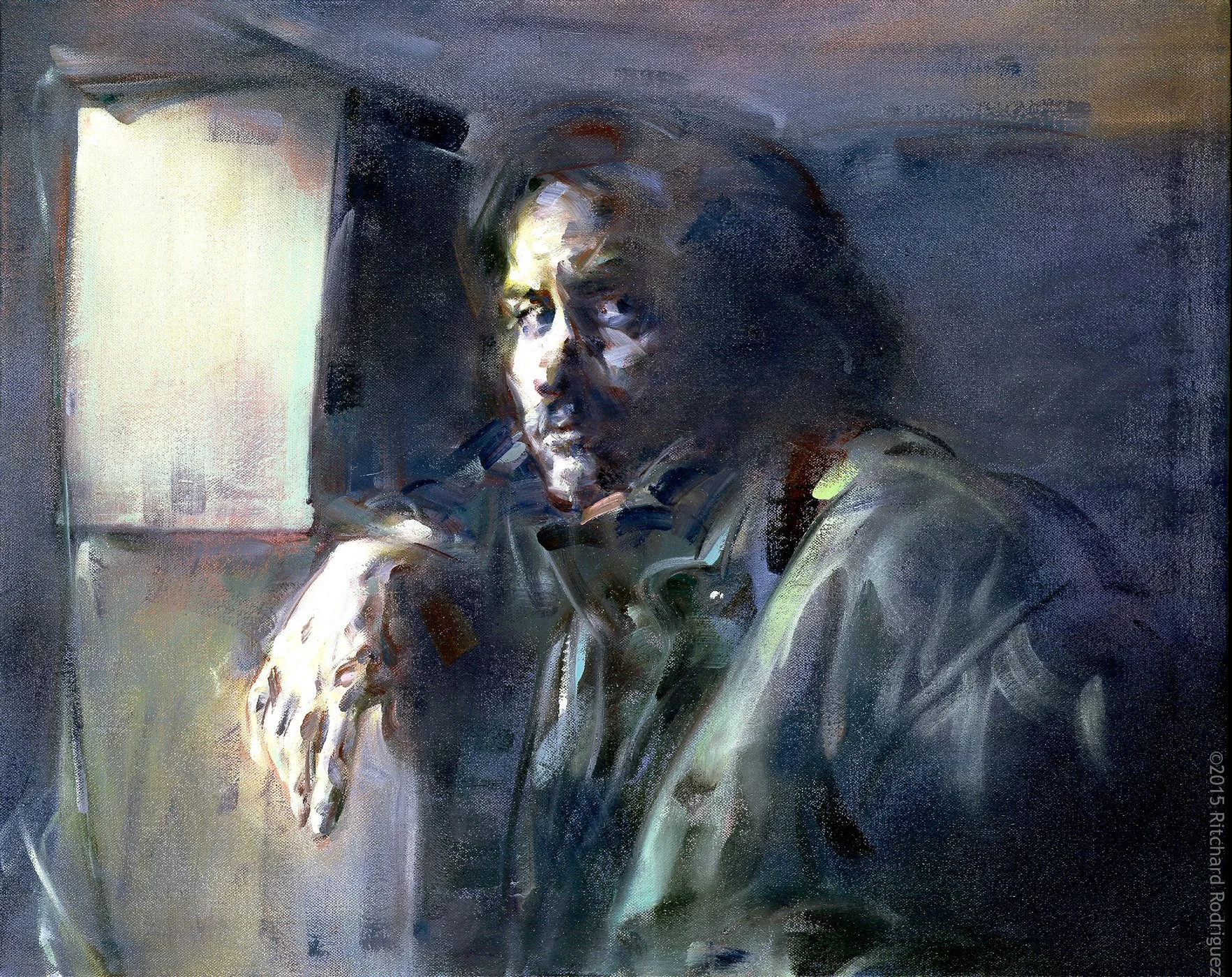
Kip Hanrahan by Ritchard Rodriguez
Kip sauntered and slinked and hustled and rolled his way through some of New York’s darkest days. With one foot planted firmly in the five boroughs, Kip’s palette reaches out beyond city limits, incorporating glimpses of Africa and Arabia, tracing the contours of global capital and the faults of international politics. His allusions run deep, building out a curious, profoundly literate working class perspective, one largely told in first person poetics. He was uncompromising and hard-headed, difficult and demanding, but his steadfast commitment to his singular vision earned him a rare sort of respect. Kip never sold out, he never crossed over, and never even made a true pass at the limelight, but the sheer devotion with which he explored his proletarian passions has won him a loyal following. He’s obscurer still in his work through American Clavé, which released work from a diverse roster of talent, and his work with Conjure, a band that released three records of Afro-Cuban jazz. Kip’s stacks are deep, and you could dig for days.
A lot has changed since Kip broke through, and things have got no easier for the headstrong musician. Money is tighter than ever, and once-solid revenue streams have wilted on the vine, replaced by models that are making a handful of ‘disruptors’ very wealthy. If Kip’s creative crusade calls anything to mind, it’s the constant battle between vision and viability. There’s a joy to discovering a rich catalogue hiding in the stacks, assembled painstakingly over decades with little concern for radio-ready hitmaking, and as time goes on, it seems harder to pull off such a coup.
Buy a CD, go to a show, get some merchandise. If you’re looking for a place to start, you could do a lot worse than your favourite Kip album – and if you don’t have one yet, you’ve got a lot of good music ahead of you.